
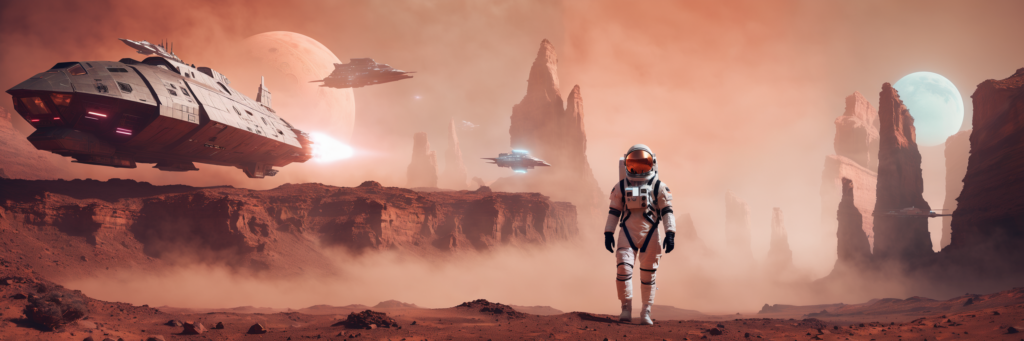
Cinematic Environment Studies 01
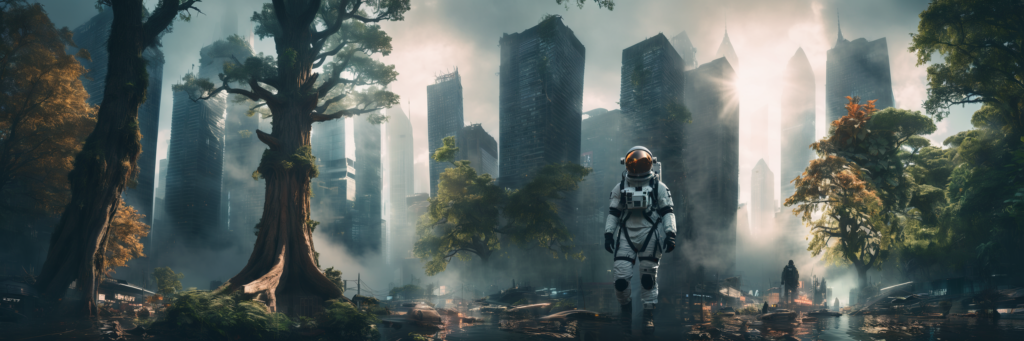
Cinematic Environment Studies 02
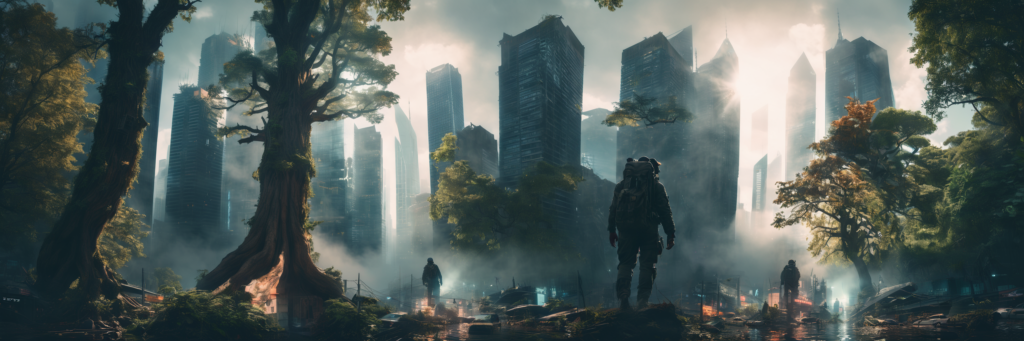
Cinematic Environment Studies 03
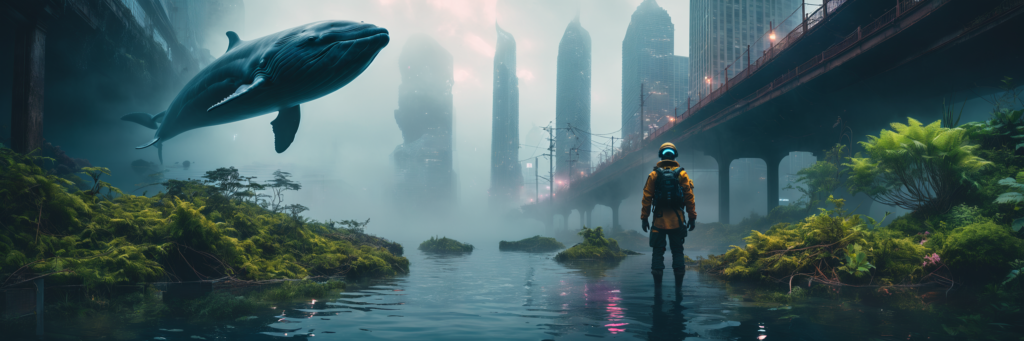
Cinematic Environment Studies 04
Cinematic Environment Studies 05
Worldbuilding Through Environment Design
Concept: A series exploring how a consistent cinematic composition can evolve through environmental transformation.
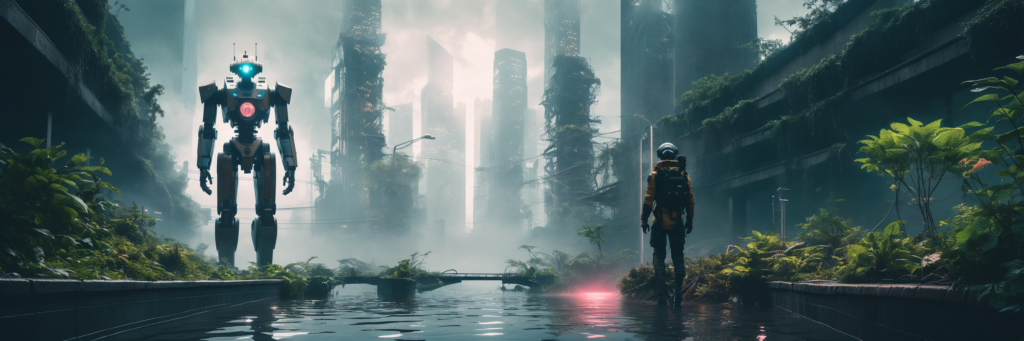
Each scene maintains a similar visual structure — a lone explorer, panoramic framing, atmospheric depth, and monumental scale, while introducing entirely different worlds, ecosystems, and narrative elements.
By keeping the compositional foundation intact and varying only the environment, subjects, and worldbuilding components, the series investigates how atmosphere alone can reshape the emotional experience of an image.
This creates a visual contrast between familiarity (pose) and novelty (form), resulting in a cohesive yet diverse set of characters.
Prompt (Base Composition): masterpiece, RAW photo, best quality, volumetric lighting, cinematic lighting, film grain, environmental storytelling, panoramic composition, lone explorer, atmospheric perspective, fog, realistic textures, ultra detailed, science fiction, fantasy, epic scale, depth of field, dramatic sky, (artwork in the style of Beeple)
Prompt (Environment Variations):
abandoned megacity, flooded city, ancient forest growing through skyscrapers, giant bioluminescent whale, colossal trees, post-apocalyptic architecture, futuristic ruins, overgrown vegetation, floating structures, environmental scale contrast, mist, water reflections, cinematic god rays, worldbuilding concepts, surreal ecosystems
Details:
Model kind: XL
Workflow: ComfyUI + Multi Area Conditioning
Style: Cinematic Environment Design
Lighting: Volumetric Natural Light
Focus: Environment Variation + Scale Study
Mood: Atmospheric, exploratory, cinematic
Tools:
ComfyUI
Note
This series began as an experiment in environmental storytelling. Rather than generating completely unrelated scenes, I wanted to understand how much of an image’s emotional impact comes from the environment itself.
By preserving a similar camera language and explorer perspective across every composition, small changes in worldbuilding become much easier to observe. Ancient forests, flooded megacities, abandoned infrastructure, giant whales, autonomous machines, and post-human landscapes all emerge from the same visual framework.
The result feels less like a collection of illustrations and more like alternate realities built from a shared cinematic language.
CREDITS
All images generated and art-directed by FormaKim.